
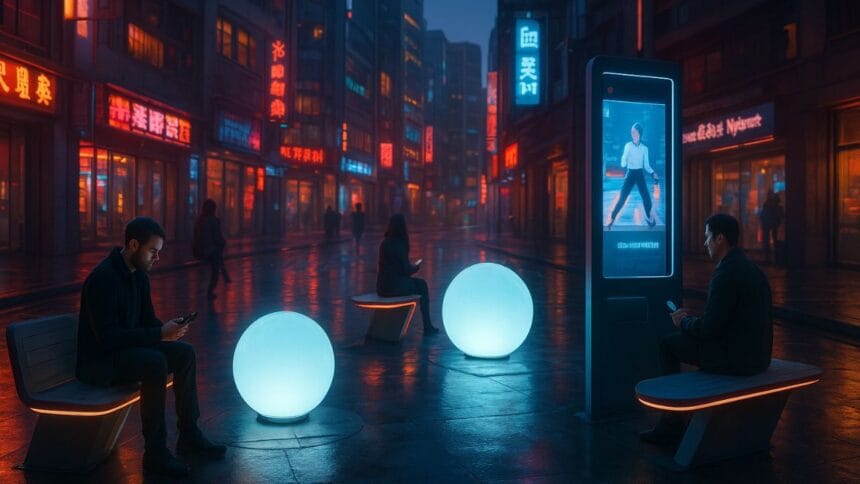
What if charging your smartphone on the go didn’t require hunting for a café, carrying a power bank, or worrying about battery anxiety? Instead, imagine a world where the streets themselves become your Street Charging Stations completely free, beautifully designed, and cleverly integrated into everyday life.
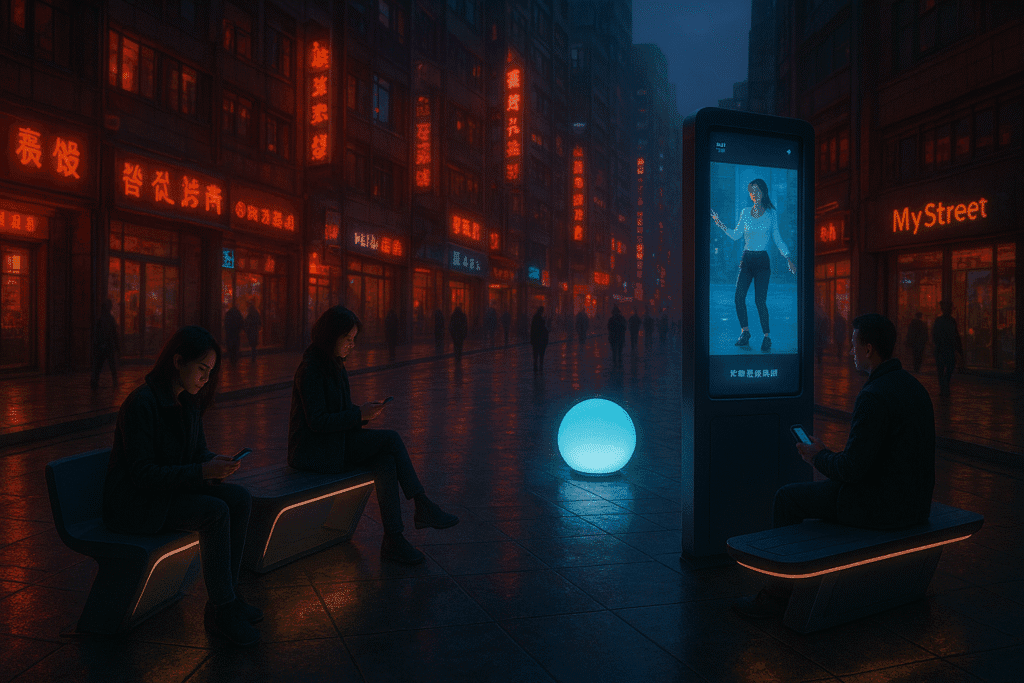
This is the futuristic concept emerging across several Chinese cities, and it’s giving serious 2050 vibes. Think: benches that recharge your devices, decorative spheres glowing in the middle of pavements, and interactive screens that keep you entertained while your phone powers up. It feels like sci-fi, but it’s happening now.
In this article, we’ll explore what these street charging stations are, how they work, why they offer a glimpse into the future of urban living, and what they say about the evolving relationship between technology and public spaces.
A New Kind of Public Infrastructure: What Are Street Charging Stations?
Across China’s rapidly modernizing cities, authorities and private tech companies are experimenting with smart street furniture. These aren’t just ordinary benches or decorative installations—they are functional power hubs.
You’ll find:
- Solar-powered benches with wireless charging pads
- Charging spheres placed in the center of walkways
- Smart poles offering USB ports, WiFi, security cameras, and display screens
- Micro-charging pods along busy streets and bus stops
What makes these installations unique is not just their utility but their seamless integration into the visual landscape. A glowing orb that looks purely aesthetic may actually be a power source. A minimalist bench may hide high-capacity batteries powering your devices for free.
It’s a combination of art, accessibility, and tech innovation.
The Catch: Free Power in Exchange for Your Attention
Here’s the twist that’s turning heads:
To access the free charging, users often need to watch content on nearby screens.
This content can be:
- Advertisements
- City announcements
- Short videos
- News snippets
- Public awareness messages
It’s a clever exchange — you get free energy, the city gets engagement.
Many users say time slips away while they’re watching, turning what used to be an inconvenient charging break into an oddly enjoyable experience. In a world addicted to screens, this system almost feels natural.
Why China’s Charging Stations Feel Like the Future
These street installations aren’t just functional; they’re part of a bigger design philosophy: smart urbanism.
Here’s why they feel like a vision of 2050:
1. Technology Becomes Invisible Yet Essential
The future isn’t about flashy robots or giant screens — it’s about making technology blend effortlessly into the environment. Charging spheres and benches are a perfect example. They don’t look like machines, but they function like mini-tech hubs.
2. Convenience Is the New Currency
In busy urban life, convenience wins. Being able to charge your phone while simply walking, relaxing, or waiting for a bus feels transformative.
3. Engagement Becomes Part of Public Infrastructure
These stations introduce a new economy:
Free service in exchange for attention.
It’s not unlike how social media platforms operate—but now it’s moved into the physical world.
4. Public Spaces Are Becoming Smarter
From smart bins to AI-powered traffic systems, cities are evolving. Charging benches add another layer to that ecosystem.
5. Clean Energy Meets Everyday Needs
Most installations use solar panels, energy-efficient batteries, or low-voltage smart tech. Sustainable design and futuristic convenience meet in one place.
A Subtle Shift in Human Behavior
One of the interesting effects of these stations is how they change the way people interact with public spaces.
Instead of sitting in a corner café or standing against a wall near a plug, people begin to gather around charging benches or spheres. This creates micro-communities, even if temporarily.
The content screens also catch the attention of passersby, nudging them to slow down and engage. It becomes a new kind of social pause — part entertainment, part utility.
Are There Downsides? Experts Weigh In
While the concept is futuristic and convenient, urban planners and tech analysts have raised some questions.
1. Attention Economy Concerns
Is exchanging attention for free power harmless, or is it another step in the growing influence of media over daily life?
2. Data Privacy
Some smart benches can track usage data. Whether this data stays anonymous depends on city regulations.
3. Vandalism and Maintenance
Public electronics need higher durability and maintenance budgets.
4. Accessibility
Are these stations placed in high-traffic, diverse areas, or mainly in tourist zones?
Despite these concerns, the overall response from the public has been positive, especially among younger generations who value convenience and digital connectivity.
How This Fits Into China’s Bigger Smart-City Vision
China has been investing heavily in Smart City 2.0 initiatives—projects that combine infrastructure with digital technology.
These street charging systems align with goals like:
- Reducing digital inequality
- Building climate-friendly public services
- Improving urban mobility
- Enhancing citizen engagement
- Encouraging public use of renewable energy
The long-term vision is a city that feels alive—adaptive, useful, and connected.
Could This Concept Spread Globally?
Absolutely.
Cities in Europe, the Middle East, and Southeast Asia are already experimenting with:
- Smart benches
- Solar charging hubs
- Digitalized public spaces
However, China’s approach stands out due to scale, design ambition, and integration with urban culture.
As the world becomes more mobile and power-hungry, other nations will likely explore similar systems — especially as advertising-funded models lower deployment costs.
The Bottom Line: A Glimpse of Tomorrow’s Urban Life
China’s street charging stations are more than a convenience—they’re a preview of how future cities will merge public spaces with smart tech.
Imagine a world where:
🔋 You never worry about low battery
🛋 Public furniture doubles as a tech device
🎥 Screens entertain while you wait
🌍 Clean energy powers your routine
🏙️ Streets feel like interactive experiences
This blend of technology, design, and engagement hints at what global cities may look like in the coming decades.
Free power, free entertainment, and a subtle push to rethink how we move through our urban environments — China’s 2050 vibe might be closer than we think.
Read More: The Future of Smart Speed Bump
Read More: High-Performance Concrete Build Business Case Value